
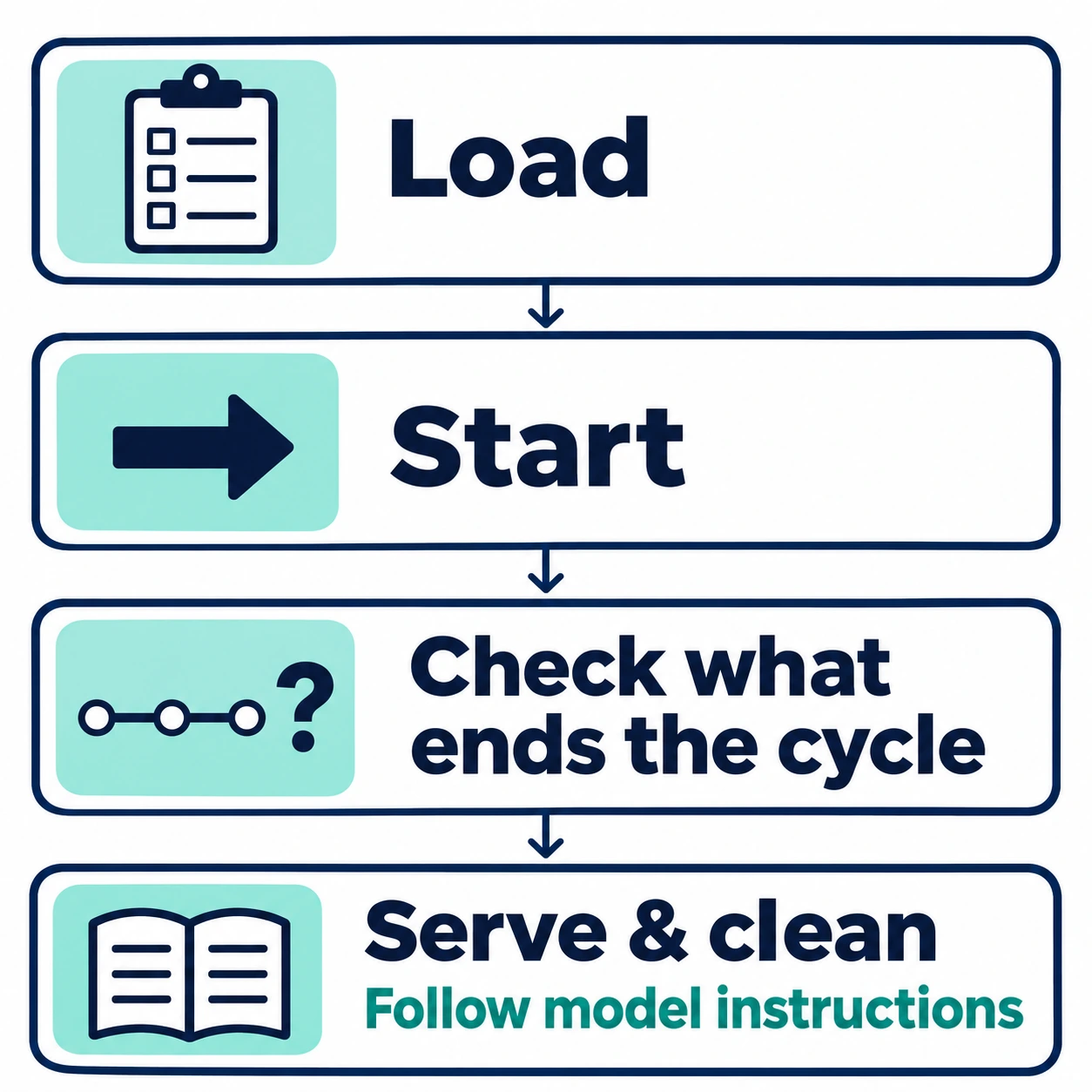
Choose the appliance by the steps you want the operator or machine to perform. An electric coffee pot provides a way to heat the preparation. An automatic Turkish coffee machine may also control when heating ends. For either offer, ask the supplier to show what the user does, what the selected model does, and how the operator knows the brew has finished. Confirm the result using the approved instructions for the quoted configuration.
The short answer
Choose the complete product configuration for the intended task, not just a nominal wattage, capacity or picture. The catalogue describes seven HCP references with PP, glass and stainless-steel combinations. It calls the nominal capacity 250 ml or five small cups; this does not define maximum safe fill or every coffee recipe. Protection features need the current model instructions.
Define what the user needs to achieve
Write a brief that includes coffee preparation method; intended working fill; handling and cleaning. Identify the normal quantity and frequency of use, the environment, who will operate it and what evidence your sales or quality team requires. If the application changes, review suitability again.
Which steps does the operator still perform?
Ask suppliers to demonstrate a normal preparation from loading to cleanup. Write down the action at each step, who performs it and what evidence supports it. This makes two offers comparable even when their marketing names are similar.
Load the vessel and start the cycle
Record the permitted recipe, working fill and where each ingredient goes. Check which control starts heating and whether the operator must remain present or take another action during the run. A single start button establishes how a cycle begins. To determine what happens later, ask for the documented sequence or observe the approved sample.
Check what signals or ends heating
Ask the supplier to distinguish an audible or visual cue, normal end-of-brew control, and protective shutoff. If the model gives a cue, ask what the user must do next. If the offer claims automatic stopping or overflow control, request its trigger, supported conditions and current instructions. Verify any demonstration against the intended recipe and fill. Keep an unsupported feature open in the comparison record.
Serve, reset and clean
Ask which vessel or part the operator lifts to pour, what must be reset for the next preparation and which components may be cleaned by the stated method. Record these steps from the approved instructions. A detachable vessel or a product photo alone does not establish a cleaning permission.
How should a buyer verify an automatic feature?
Beko Ireland describes its BKK2300 as a one-button machine for one to three cups and says its AntiSpill function ends brewing to help limit spillages. This is a manufacturer description of BKK2300. For an HCP offer, record automatic brew completion and overflow control as unconfirmed until the exact HCP model documentation and agreed sample review support the proposed wording.
Give normal operation and protection separate rows
Ask the supplier to identify what ends an ordinary brew and what protections apply when conditions depart from normal use. Fill in a separate row for each function and record the applicable model suffix and evidence reference. Leave a row open when a catalogue description does not identify the condition that triggers it.
Use the nominal cup count to start a question
The HOPING catalogue uses 250 ml or five small cups as a nominal reference. Ask for the actual cup volume used in a serving claim, the permitted working fill and the preparation covered by the instructions. Request evidence for the exact serving size you plan to advertise.
- Check model and document coverage
Match the offer, sample and current instructions by full model and revision.
Compare catalogue data without mixing versions
Use the model, source page and configuration together. Vessel material, nominal serving reference and electrical version. Copy units exactly; distinguish nominal vessels from usable fill, carton weights from unit weights, and alternative electrical versions from automatic dual-voltage capability. A comparison table should show what is known and what still needs confirmation.
Review the supplied set and channel
Agree the accessories, parts, colors and packaging in an itemized offer. Retail and e-commerce programs may need different artwork, manuals, inserts or shipping protection. A product photo cannot determine everything supplied with an order. Ask which changes can use the existing platform and which require separate development.
Approve a representative sample and documents
Check that the sample is the selected configuration. Record the relevant performance or fit criteria, how they will be inspected, the manual revision and the report/certificate scope. If you require a particular test, agree its method, sample version, responsibility and acceptance criteria before ordering.
Turn the comparison into a useful enquiry
Send a shortlist of full model references with the application, market, quantity, electrical version, accessory set, customization, document needs and schedule. Ask HOPING to separate confirmed items, available alternatives and points requiring review. This makes quotations comparable and keeps engineering, quality and purchasing aligned. For this comparison, include the destination country, required supply version, recipe and permitted fill to check, intended serving size, and the precise automation you expect. Indicate whether a cue is sufficient or whether the quoted model must end normal brewing automatically.
- Compare HOPING coffee pot models
Shortlist the exact HCP configuration.
- Discuss the required workflow and request an offer
Send your destination, recipe and required control sequence.
| Step | Compare | Required next action |
|---|---|---|
| Intended task | coffee preparation method; intended working fill; handling and cleaning | Define the recipe/object and expected result before selecting a model |
| Configuration | Vessel material, nominal serving reference and electrical version | Record each option in the specification and approved sample |
| Evidence | Nameplate, specification, operating instructions and applicable reports | Match full model and market version; record the document date |
| Channel | Retail, distribution, e-commerce or private label | Confirm packaging, artwork, language and after-sales information |
| Step | Ask the supplier to show | Evidence to record |
|---|---|---|
| Loading | Where ingredients go and the permitted working quantity | Manual revision, recipe and quantity with units |
| Starting | User action and any intervention while heating | Control sequence on the quoted sample |
| Normal brew completion | Cue, operator action or automatic end of heating | Expected end condition and actual sample observation |
| Protection | Any separately claimed protective or overflow function | Exact claim, applicable conditions and model evidence |
| Serving and cleanup | What is handled, reset or removed after the cycle | Instructions for the actual supplied parts |
Which coffee pot models are intended for Turkish or Greek coffee preparation?
The current coffee-pot family contains HCP-001, HCP-002, HCP-004, HCP-005, HCP-006, HCP-007 and HCP-008. Compare the listed vessel materials, power and market version. The nominal reference is 250 ml or five small cups; safe working fill and recipe require the manual.
Can the coffee pot appearance and handle be customized?
The company offers evaluation of appearance and structural changes. Define the exact HCP model and requested handle, material or finish; confirm engineering, handling, tooling and test implications before treating the change as available.
What overflow-prevention features are available, if any?
The catalogue protection descriptions do not establish a verified anti-overflow feature for every coffee pot. Ask for the exact model design, instructions and supporting test evidence. Do not equate overheat or boil-dry protection with overflow prevention.
How should a buyer compare electric coffee pots with electric kettles?
Start with the preparation task: a coffee pot’s intended recipe, fill and handling differ from a kettle’s water-boiling task. Compare complete specifications and instructions, not just wattage. Neither product should inherit the other’s permitted ingredients or operating conditions.
Which user instructions and language versions can accompany each model?
Specify the destination and requested languages, and ask for the model-specific manual revision and artwork approval process. The general packaging offer is not evidence that every language version already exists.
What voltage, plug and labeling details should be confirmed for a Turkish coffee maker sold in Saudi Arabia?
Specify the full HCP model, actual nameplate, plug, frequency, manual/label languages and intended destination. Have the responsible market team verify current local requirements and supporting model documents; a catalogue voltage alternative does not establish market approval.
Does boil-dry protection confirm automatic completion of a normal coffee brew?
Check whether the evidence covers ordinary brewing or a protective response. Verify the trigger and supported conditions for each. A protection listing does not establish an end-of-brew control.
Does a five-small-cup reference establish how many of my cups the pot can prepare?
Use your proposed cup size and the exact model’s approved working fill and preparation limits. A nominal capacity reference does not establish the number of servings for a different cup.
Sources
Models covered by this guide
Check the current configuration, source and enquiry requirements on the individual model page.
- HCP-006 · Electric Greek & Turkish Coffee Pot
- HCP-007 · Electric Greek & Turkish Coffee Pot
- HCP-004 · Electric Greek & Turkish Coffee Pot
- HCP-002 · Electric Greek & Turkish Coffee Pot
- HCP-001 · Electric Greek & Turkish Coffee Pot
- HCP-005 · Electric Greek & Turkish Coffee Pot
- HCP-008 · Electric Greek & Turkish Coffee Pot