
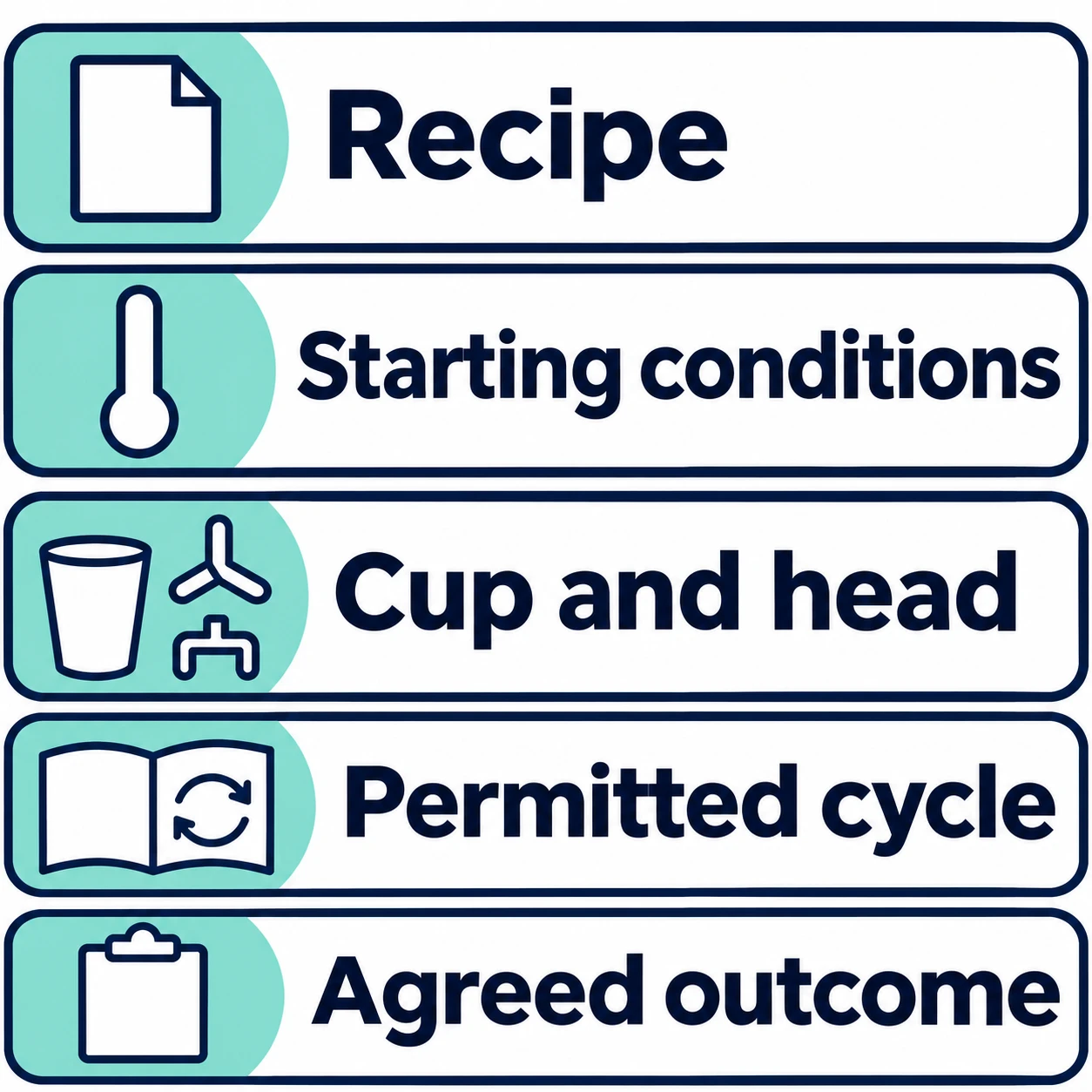
Compare drink mixers using the actual recipe, cup, mixing head and permitted operating cycle. Fix recipe variables and define the desired foam before attributing a difference to the device.
The short answer
Choose the complete product configuration for the intended task, not just a nominal wattage, capacity or picture. The selected catalogue lists HSM-705S, HSM-706S, HSM-707, HSM-707S, HSM-717, HSM-730 and HSM-731. Compare their source images, cup arrangements and packing versions. Do not infer continuous commercial duty or ice-processing capability from appearance.
Define what the user needs to achieve
Write a brief that includes beverage recipe and ingredients; batch volume; run/rest pattern. Identify the normal quantity and frequency of use, the environment, who will operate it and what evidence your sales or quality team requires. If the application changes, review suitability again.
Compare catalogue data without mixing versions
Use the model, source page and configuration together. Cup, mixing elements, two-speed control and market version. Copy units exactly; distinguish nominal vessels from usable fill, carton weights from unit weights, and alternative electrical versions from automatic dual-voltage capability. A comparison table should show what is known and what still needs confirmation.
Review the supplied set and channel
Agree the accessories, parts, colors and packaging in an itemized offer. Retail and e-commerce programs may need different artwork, manuals, inserts or shipping protection. A product photo cannot determine everything supplied with an order. Ask which changes can use the existing platform and which require separate development.
Which recipe variables should remain fixed when comparing mixers?
Begin with a repeatable recipe record and a clear description of the desired result. A label such as frappe or Freddo does not identify every ingredient, quantity or preparation step. Two samples cannot be judged fairly if they are asked to process different mixtures.
Record the ingredient and starting condition
For a milk-based recipe, record the actual product, its labelled composition where relevant, starting temperature, other ingredients and working amount. Use explicit units. If the ingredient or its starting condition changes, keep that change visible in the record rather than treating the result as a pure device comparison.
This guide does not prescribe a best milk-fat percentage or a preferred temperature. Those would need evidence for the intended recipe and equipment. Different customer preferences also need to be described: a buyer seeking a softer texture is not necessarily asking for the same result as one seeking a firmer foam. Agree the target before observing the samples.
Keep the cup and mixing configuration identifiable
Record the full appliance model, supplied electrical version, mixing head and cup. Keep the working amount distinct from nominal cup capacity. Do not assume that a result transfers to another cup or attachment because the motor housing looks the same. A changed head or cup can require a new suitability review under the applicable instructions.
Use only the settings and recipe conditions supported for the selected configuration. An iced beverage description does not by itself permit ice processing. If the requested ingredients or working amount are outside the documented scope, resolve that question before the demonstration rather than using an observation to justify an unapproved operation.
How should foam preference and repeatability affect the buying decision?
Evaluate the recorded outcome against the buyer’s agreed criteria rather than ranking devices by a power label or an impression of force. The purpose of a sample review is to identify a suitable configuration and the evidence still needed for the proposed use.
Agree the observation before comparing results
Define what the reviewers will record: the intended texture, visible foam condition, unwanted splashing during permitted use, and any other relevant outcome the buyer has specified. Agree observation points and a recording approach before comparing samples. This guide sets no universal foam height, persistence time or pass limit.
If the buyer has not yet defined an acceptable result, document preferences and questions first. Do not convert a subjective impression into a claim that one appliance performs better in every recipe. A useful review may reveal that the buyer needs to refine the recipe or choose a different permitted configuration rather than simply request a higher power rating.
Separate repeatability from unsupported continuous use
Record each preparation and any change to ingredients, starting temperature, amount, cup, head or settings. Follow the selected model’s documented run and rest instructions throughout. A successful preparation does not establish continuous commercial duty, and the word professional does not fill a missing duty-cycle record.
When outcomes differ, list the changed or unknown conditions before assigning a cause. Foam changing after preparation does not, by itself, prove a motor problem. If conditions were not matched, the observations can still help identify the next question, but they should not be presented as a controlled performance ranking.
For a sample enquiry, provide the complete model reference, market, recipe record, intended working amount, cup and head requirements, use frequency and desired result. Ask which parts of the proposed evaluation are supported by the current instructions and what additional evidence is needed.
Approve a representative sample and documents
Check that the sample is the selected configuration. Record the relevant performance or fit criteria, how they will be inspected, the manual revision and the report/certificate scope. If you require a particular test, agree its method, sample version, responsibility and acceptance criteria before ordering.
Turn the comparison into a useful enquiry
Send a shortlist of full model references with the application, market, quantity, electrical version, accessory set, customization, document needs and schedule. Ask HOPING to separate confirmed items, available alternatives and points requiring review. This makes quotations comparable and keeps engineering, quality and purchasing aligned.
Does the supplied cup handle a complete serving?
Check cup seating and recipe handling as two acceptance questions. A consumer discussion described splashing with a Waring mixer even though the included cup fitted its holder. The account raises a sample-review question and does not establish a cause, a working limit, or a result for any HOPING model.
What should the sample review record?
Ask the supplier to identify the cup and mixer, then confirm that the recipe and working amount are permitted. Keep liquid amount, other approved ingredients, initial level, available headroom and permitted setting in the same record. For the intended serving, note whether splashing occurs at the agreed observation points. If instructions do not cover the recipe, resolve that gap before a demonstration.
How should the result guide an order?
If the cup seats correctly but the documented serving cannot be demonstrated within the agreed limits, leave the sample requirement open. Ask for another documented cup or configuration, or revise the serving requirement. Repeat the comparison under matched permitted conditions before approving an alternative. Save the cup reference and verified scope with the order.
What to include in your enquiry
Send the full model and destination, the proposed configuration, the buyer decision and the sample or documents already available. Ask which open items can be resolved for the specific order.
- Review the model record
Check the configuration reference.
- Discuss an order or sample review
Provide the intended conditions and open evidence questions.
| Step | Compare | Required next action |
|---|---|---|
| Intended task | beverage recipe and ingredients; batch volume; run/rest pattern | Define the recipe/object and expected result before selecting a model |
| Configuration | Cup, mixing elements, two-speed control and market version | Record each option in the specification and approved sample |
| Evidence | Nameplate, specification, operating instructions and applicable reports | Match full model and market version; record the document date |
| Channel | Retail, distribution, e-commerce or private label | Confirm packaging, artwork, language and after-sales information |
| Record group | Fields to retain | Interpretation |
|---|---|---|
| Recipe | Ingredient product, composition, starting temperature, quantities and units | A change belongs in the comparison record |
| Configuration | Model/suffix, electrical version, cup and mixing head | Do not transfer a result to an unidentified version |
| Operation | Permitted settings and documented run/rest limits | The demonstration must stay within approved use |
| Desired result | Buyer-defined texture and observation points | Preference is not a universal performance standard |
| Observations | Outcome, deviations and sample evidence | Separate matched conditions from open questions |
| Check | Record | Decision |
|---|---|---|
| Cup fit | Cup reference and holder position | Verify the supplied set fits |
| Working amount | Permitted whole recipe and starting level | Verify the intended serving separately |
| Outcome | Headroom and observations | Agree the supported scope or keep it pending |
Which drink mixer models are suitable for preparing frappe-style drinks?
Start with the current HSM-705S, HSM-706S, HSM-707, HSM-707S, HSM-717, HSM-730 and HSM-731 references. Describe the beverage recipe, cup, working quantity and run/rest pattern. Confirm suitability from the model instructions or an agreed demonstration rather than treating every frappe recipe as approved.
What cup capacities and materials can be selected?
The current HSM group lists a 450 ml AS/ABS cup or a 500 ml stainless-steel cup as catalogue options. Confirm the cup supplied with the selected model and quotation. Nominal cup size does not establish usable fill.
Can the mixing head or beater material be customized?
The catalogue describes a stainless-steel stick with two plastic beaters. A changed mixing head or beater material requires an engineering and project review. The general OEM offer does not mean every material substitution is already approved.
What motor speed range is tested for each drink mixer model?
The current HSM catalogue lists speed positions I and II; it does not provide a verified RPM range for every configuration. Request a measured speed specification for the full model if RPM is a buying requirement.
What is the duty cycle and maximum continuous operation time?
The source package does not establish a verified continuous-use duration and rest cycle for each current HSM model. Ask for its manual and test conditions. Two speed settings and a 100 W reference do not establish continuous commercial duty.
Which safety switch configuration is approved for export?
A verified safety-switch specification and export report scope for every HSM version has not been supplied. Check the actual ordered version, manual, report model coverage and destination-market requirements with the project team.
What cleaning procedure is supported by the actual product design?
Obtain the cleaning instructions for the selected cup, shaft, housing and attachments. The supplied material does not authorize immersing powered parts, dishwasher washing or a particular cleaning chemical for every mixer.
Can drink mixers be made in 110–120 V and 220–240 V versions?
The current HSM catalogue presents 220–240 V, 50/60 Hz and 110–120 V, 60 Hz alternatives. Confirm the nameplate, plug and report coverage for the ordered version. These alternatives do not describe automatic dual-voltage operation.
What is included in a drink mixer sample and packaging quotation?
Specify the full HSM model, cup material/capacity, mixing set, electrical version, logo/color, pack and manual language, quantity, market, required files and schedule. Ask the quotation to distinguish sample fees, customization, testing, packing and shipping.
What is the difference between a frappe mixer and a milkshake mixer for retail sourcing?
Describe the recipe, ingredient viscosity, temperature, working amount, cup and duty cycle rather than relying on a frappe/milkshake marketing label. Confirm the selected HSM model against its instructions or an agreed demonstration. No ice-crushing or continuous-duty capability is inferred.
Does greater mixing force necessarily produce the foam the buyer wants?
A force impression or a power rating does not define the preferred texture. Record the buyer’s target, keep the permitted recipe and configuration identifiable, and evaluate the observed result against that target.
Can a foam result obtained with one milk product be promised for all milk products?
The recorded result belongs to the ingredients and conditions evaluated. A broader statement requires supporting evidence for its broader scope; one recipe does not establish every alternative.
Does the nominal volume define a usable serving size?
Confirm the selected recipe and permitted fill in the instructions. Check the result for the documented sample and supplied cup.
Sources
Models covered by this guide
Check the current configuration, source and enquiry requirements on the individual model page.